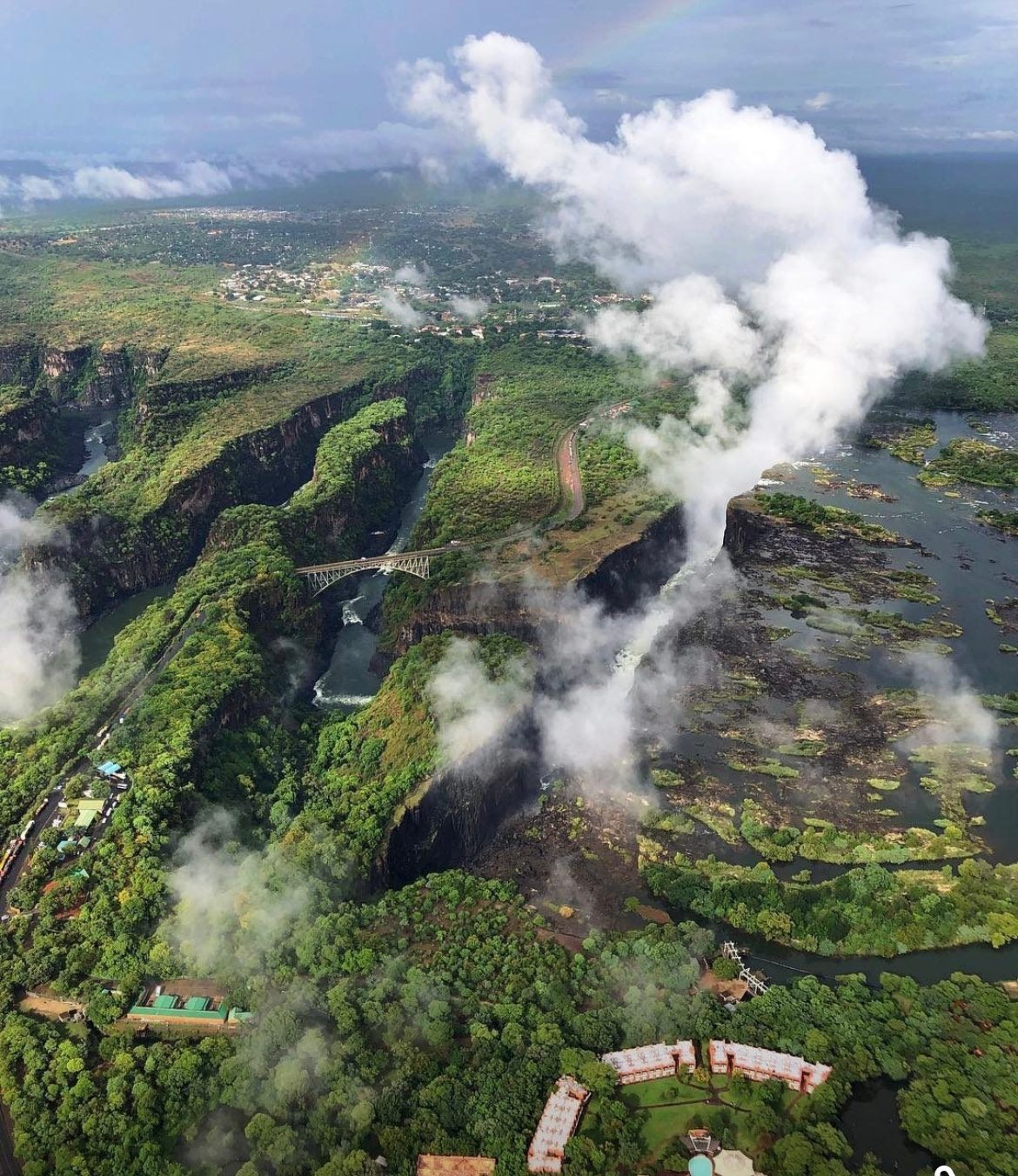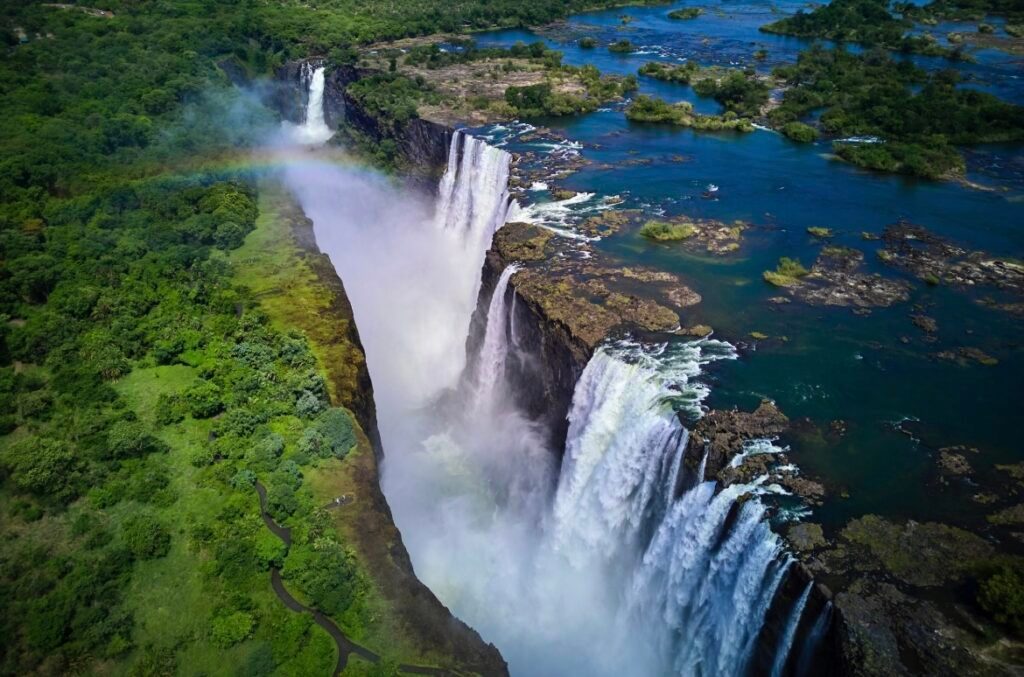
Where the mighty Zambezi River carves through basalt cliffs on the borderlands of Zambia and Zimbabwe, an extraordinary natural phenomenon unfolds. Known locally as Mosi-oa-Tunya (“the Smoke that Thunders”), Victoria Falls represents one of Africa’s most revered landscapes. Designated a UNESCO World Heritage Site in 1989, it embodies a convergence of natural beauty, cultural heritage, and ecological importance that extends far beyond its thundering waters.
Stretching 1,708 metres wide with a drop of up to 108 metres, the Falls form the largest sheet of falling water in the world. In full flood, millions of cubic metres of water cascade each minute, generating a spray that soars hundreds of metres into the air. This spray nourishes a unique rainforest ecosystem sustained solely by its moisture. Within this zone of constant mist, flora flourishes in ways unseen elsewhere in the surrounding semi-arid landscape, hosting rare plants, insects, and birdlife. Orchids, palms, and ferns cling to the rocks, while migratory birds use the Falls as a resting point on their continental journeys.