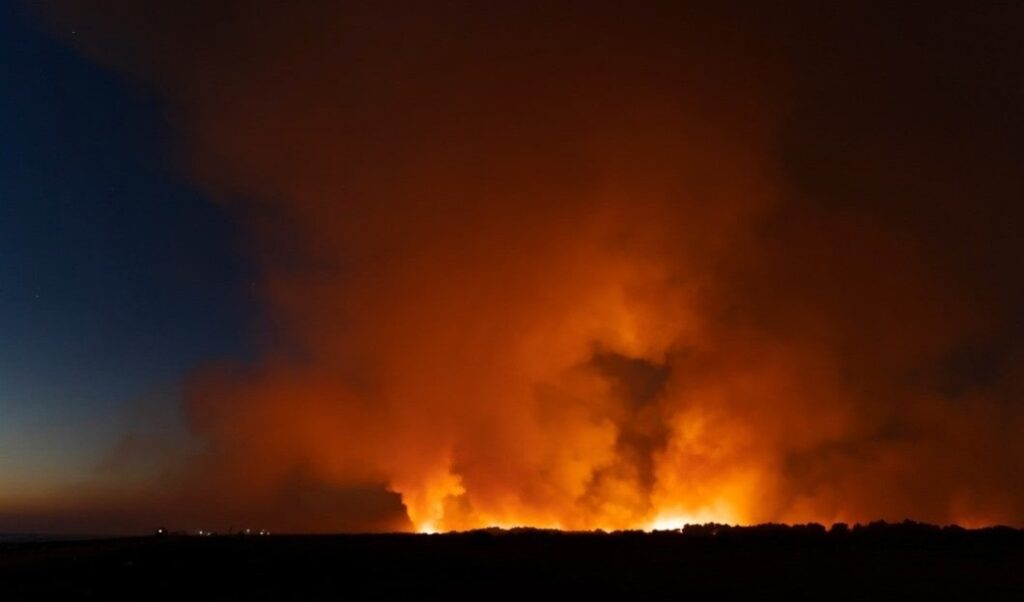
Namibia’s Etosha National Park, one of Southern Africa’s most treasured wildlife sanctuaries, has suffered a devastating wildfire that scorched over a third of its terrain, threatening both the ecological balance and the nation’s recovering tourism industry. Following an intense week-long effort by environmental authorities and emergency services, the blaze has now been contained, but its effects are expected to reverberate for years across conservation and economic sectors alike. Tourism Review source.
Spanning approximately 20,000 square kilometres, Etosha serves as a vital refuge for Namibia’s biodiversity, hosting lions, elephants, leopards, giraffes, and zebras across vast plains and the park’s iconic salt pan. Since its establishment in 1907 under German colonial rule, the park has become central to Namibia’s ecological identity and a cornerstone of its tourism economy.
Preliminary estimates indicate that roughly 38 per cent of the park’s surface area has been affected, though satellite assessments suggest the damage may be even more extensive. Vast tracts of once-green grassland are now reduced to ash. Officials from Namibia’s Ministry of Environment, Forestry and Tourism confirmed losses of wildlife, though an exact count remains uncertain. Sikongo Haihambo, the ministry’s Executive Director, noted that “recovery is possible, but naturally, it will take some time,” acknowledging both the ecological and emotional toll of the disaster.